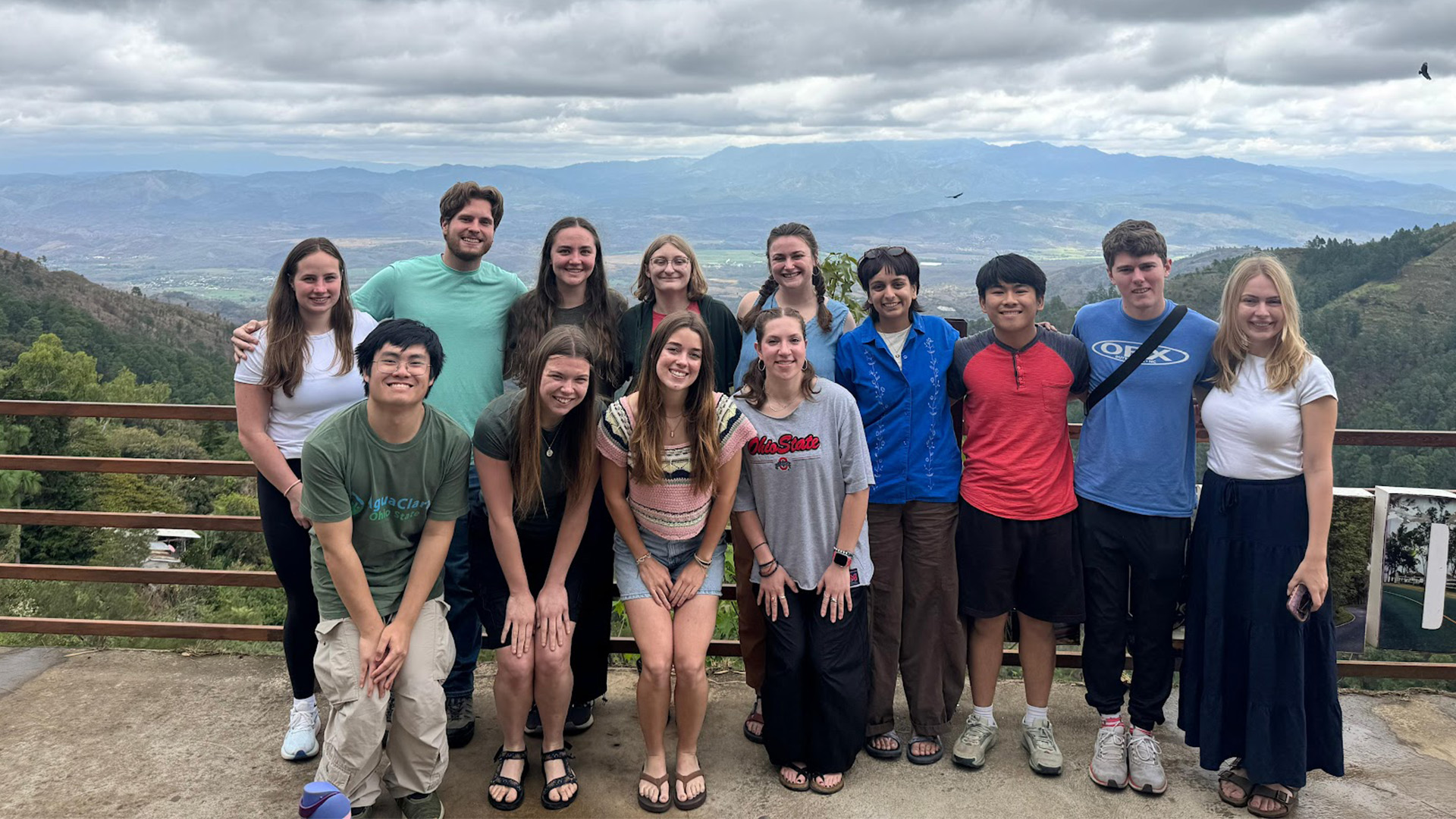
“We don't want to just use our engineering education and career to garnish profits for corporations, we want to use those skills for good. That is part of the reason it is so important to me personally, and, I think, for all humanitarian engineering students to have the ability to go abroad,” reflected Logan Cook, a chemical engineering major who participated in the Engineering in Context; Sustainable Water Treatment – Honduras program over spring break.

The Humanitarian Engineering program partners with Agua Para El Pueblo in-country, who works with AguaClara Reach to install gravity powered water filtration systems throughout Honduras. Cook was a part of the inspiration team, who worked with a capstone team that was developing an automated chemical dosing system for the water plants.
“During this program, I began to realize more and more how much I enjoy humanitarian engineering work, not only from the humanitarian perspective, but also from the engineering perspective. Seeing it firsthand, being able to interact with it and be a part of it, was a very valuable experience that has led to me to start thinking about pursuing humanitarian as a field, rather than just something I integrate into another field,” he said.
Students also collaborate with counterparts from Zamorano University, something that Cook notes was his favorite part of the program.
“My favorite part of the trip was spending time at Zamorano University. We spent 3 days there, and we were able to interact with their students the entire time. Spending time with, learning about how different their education is and just getting to know them was amazing. That cultural exchange was by far my favorite part of the trip and is an experience I am still working to properly put into words.”
Along with the technical experience that comes along with doing engineering work on site in another country, Cook walked away with insights about the field itself and the impact of human-centered engineering design, something that will forever change how he views the work.
“No matter what sector of engineering we are in, I think it is very important to understand human-centered design. That was the focus of this program, and many times I was able to directly interact with community members and hear their thoughts on the water projects being done in their community. I was able to talk to them about what they thought was being done well, and what they thought could be done better. It highlighted that we weren't engineering just to engineer, what we were doing directly impacted people's lives, and we got to hear directly from them about what they thought of it. That was a very valuable experience, and I hope to be able hold similar connections with human stakeholders in all of my future engineering,” said Cook.