
What happens to Olympic villages or Global Expo sites when their intended use is finished? Cara Berg and Samuel Tibbs, lecturers in the Knowlton School, are helping architecture students answer this question and better understand the social impact of designs over time on the Spain: Urbanism and Architectural Intervention study abroad program.

Both Berg and Tibbs had formative experiences studying abroad during their undergraduate architectural studies and continued to pursue these types of experiences when they met in graduate school at Ohio State. The pair participated as students and teaching assistants on two programs during graduate school before serving as supporting resident directors in 2023 and leading a group on their own in 2025.
“If I look back to my undergraduate self and reflect on the way I thought about things before my study abroad experience and the way I thought about things after, studying abroad was the link that changed me,” said Berg.
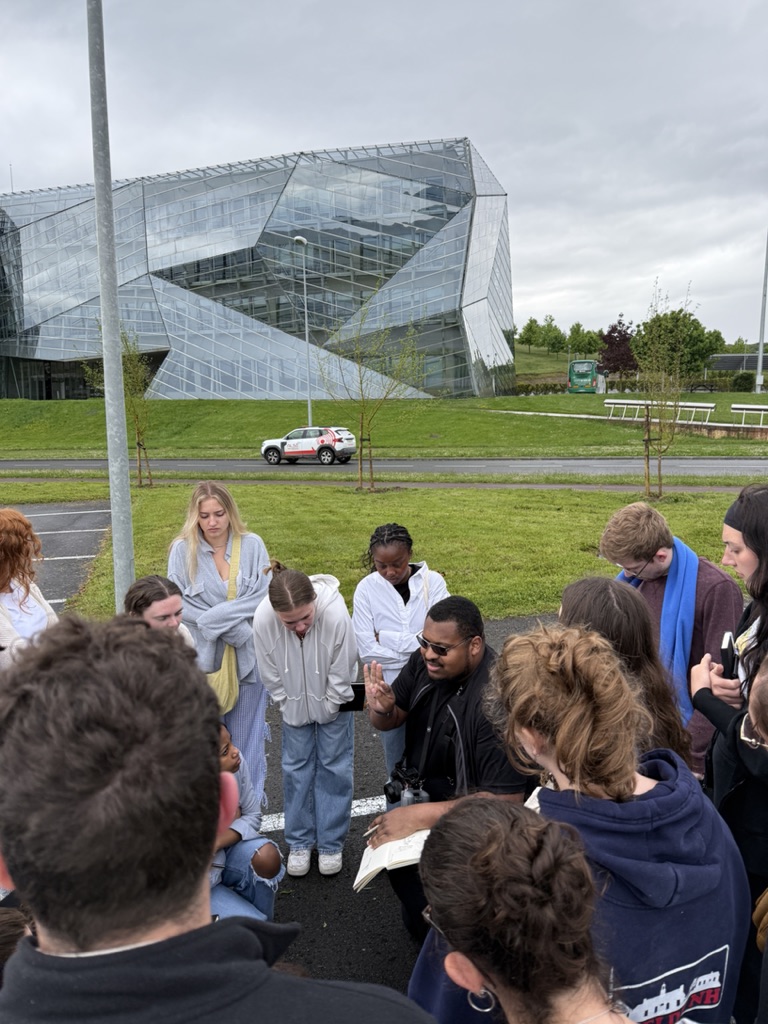
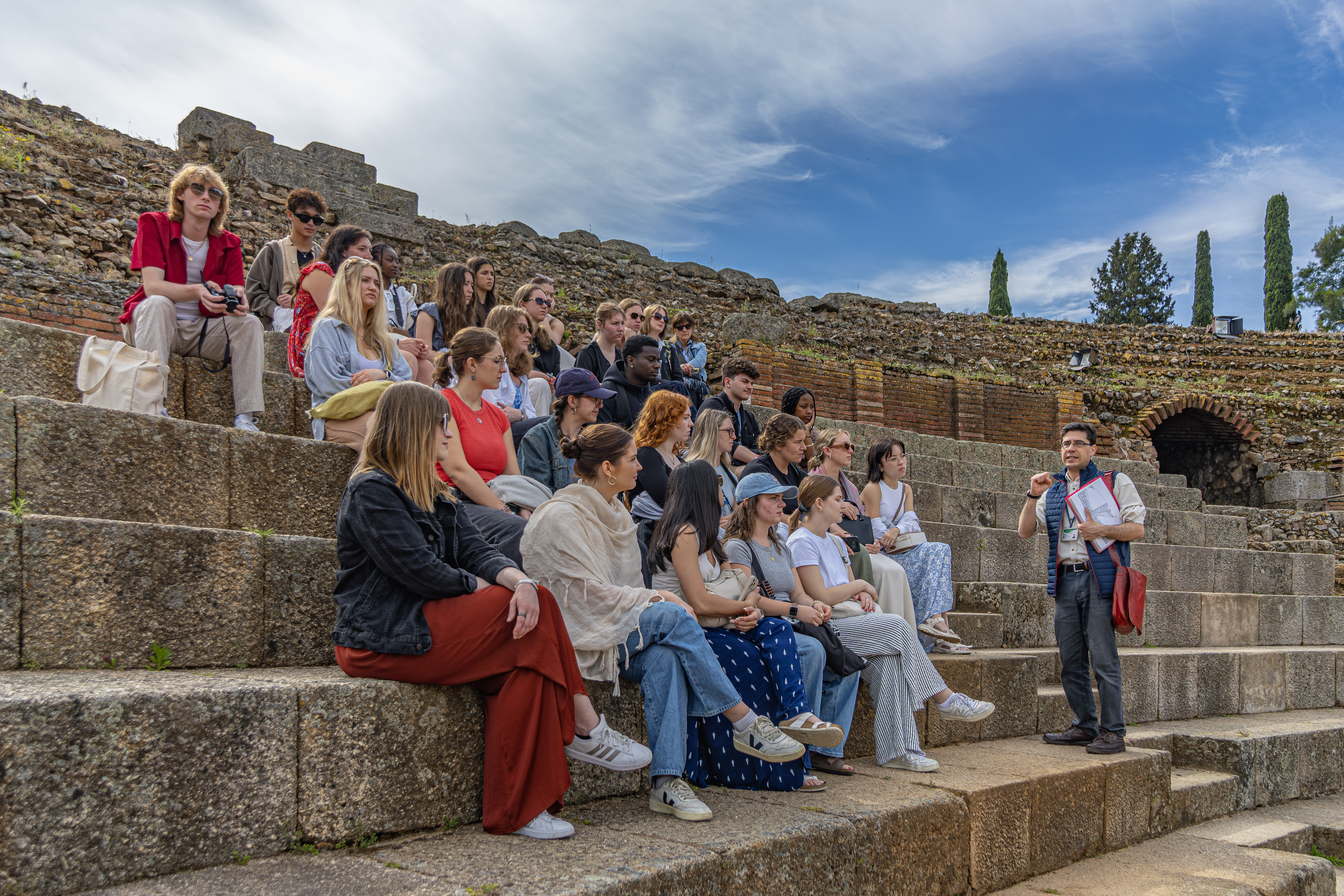
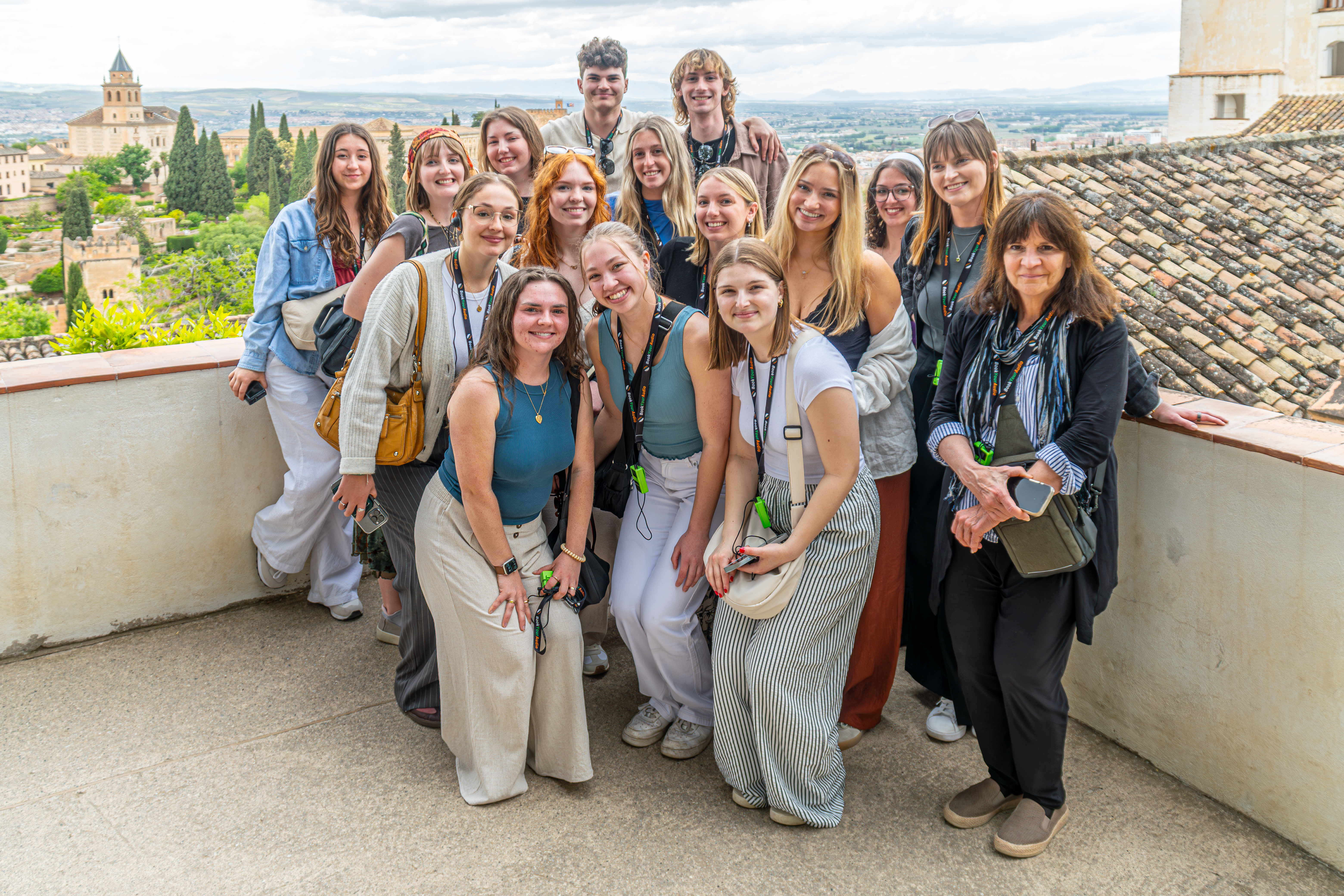
Now having the opportunity to fully curate the itinerary and thematic elements of the four-week program, Berg and Tibbs lead students to cities like Madrid, Barcelona, Seville, San Sebastian and Granada to introduce architecture students to firsthand examples of intervention, which is the strategic modification of an existing building or urban space to improve its functionality or sustainability.
During their time in Spain, the group visits historic intervention sites such as the 2004 Barcelona Olympic Village and the 1992 Seville Global Expo site to examine how culture, history and politics inform these designs over time, something that Tibbs and Berg think is incredibly valuable for students.
“It’s easy to think of architecture as, ‘I’m working on this in my studio and it’s all generated from me,’ but a key part of the course is understanding that what we do has a ripple effect on the place, and where we put what we do has a ripple effect on the work over time,” Tibbs explained.
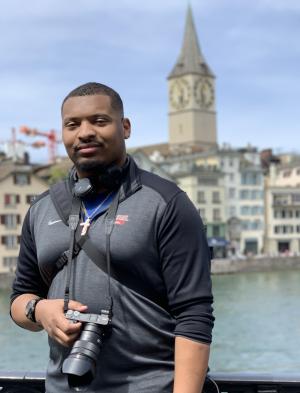
Not only do students gain client-like experiences of adopting someone else’s mindset when analyzing a work, something that is critical to the career of an architect, but they also gain the life skills associated with living in a new country for an extended period.
“Ultimately, we hope the program helps students evolve as an architect, as a designer and as a person of the world, and it helps them explore what they are interested in,” said Berg, who researches and creates the itinerary for the program.
For new resident directors and study abroad leaders, Berg and Tibbs explain that leading programs like these provide an opportunity to continue their own personal research, as well as learn more about the world and strengthen teaching skills.
“There’s no better place to see the lightbulb go off than study abroad. If you enjoy teaching and seeing students grow, run a study abroad. It is hard work, but the opportunity to live in something that you’ve created is incredibly satisfying,” said Tibbs.
The pair will return to Spain this summer to continue providing architecture students with these valuable, unforgettable experiences.