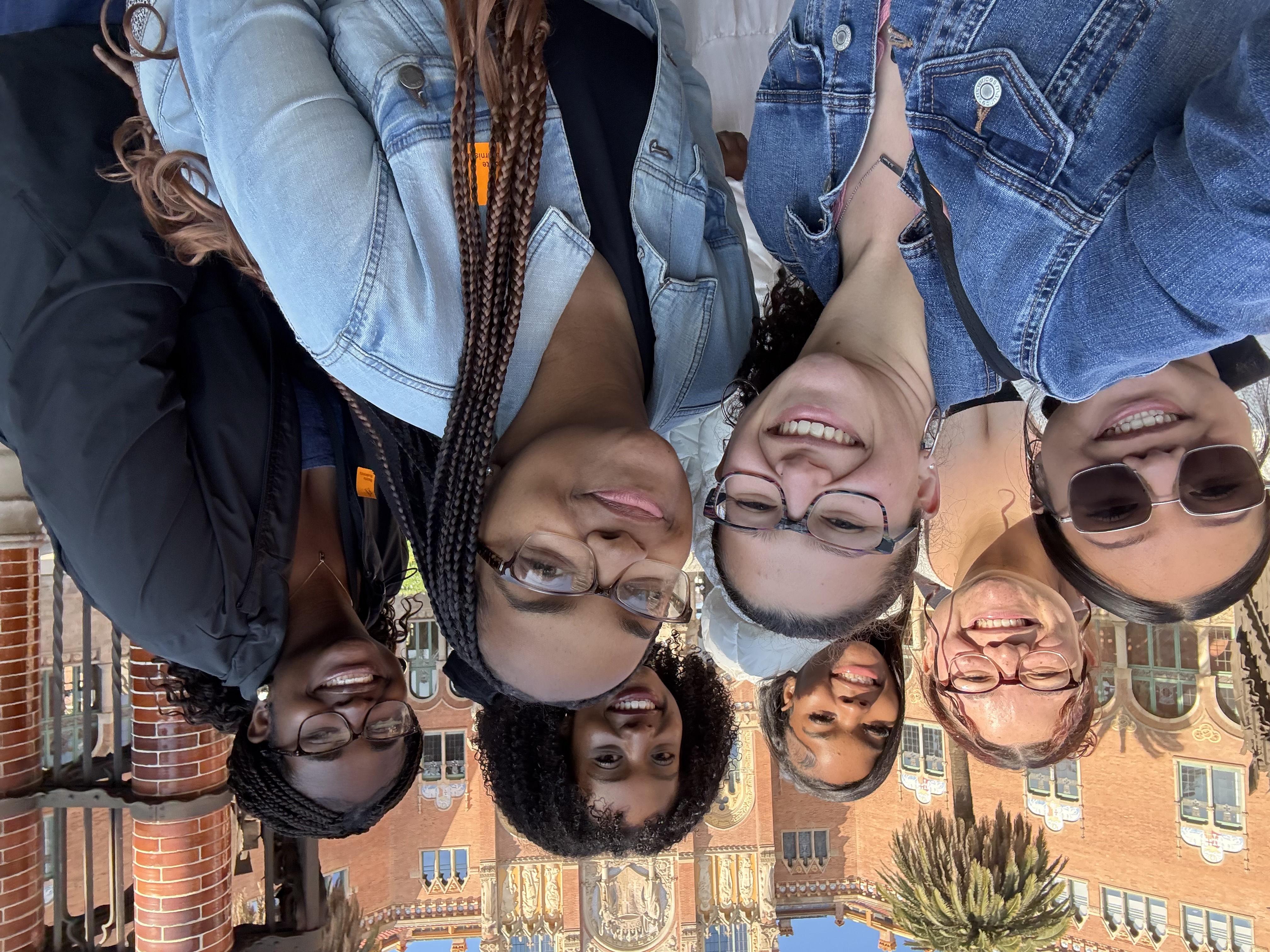
“As an aspiring communications professional, it is so important for me to understand how to create messages that resonate with diverse audiences of many different backgrounds, including audiences around the globe. By spending a week communicating in a different language with people from a different country, I got to practice doing just that,” said Paige Galperin, a communications and phycology double major who participated in the Multicultural Histories and Legacies of Spain program over spring break.

Students examine how social change affects the ways individuals live, learn and engage with each other in two major cities, Madrid and Barcelona. The program is a part of the MUNDO ES HESA semester-long course, where students take part in various experiences designed to help them analyze the concept of social change in domestic and international contexts.
“Going abroad was important for me because I want to be an informed and culturally competent citizen of the world, a skill that I believe becomes more important every day as our world becomes ever more interconnected and globalized. By immersing myself in a new culture, practicing my Spanish language skills and learning about the history and customs of Spain, I was able to develop a skillset for respectfully and effectively interacting with people from different cultures,” said Galperin.
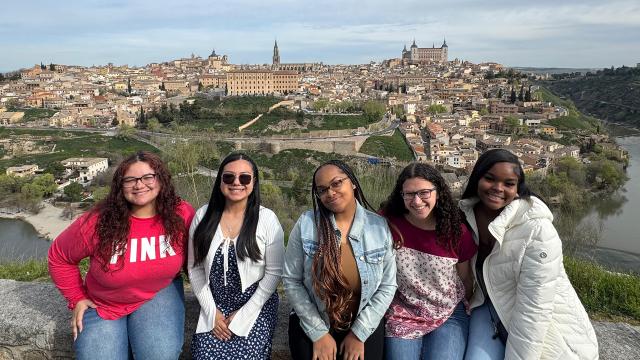
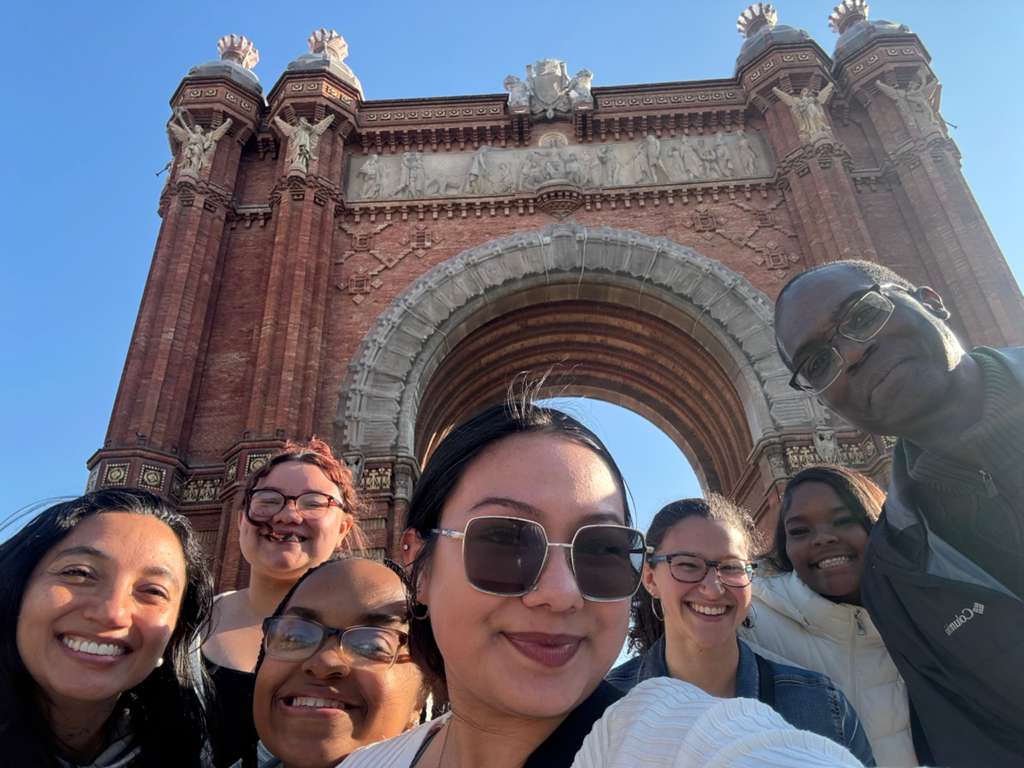
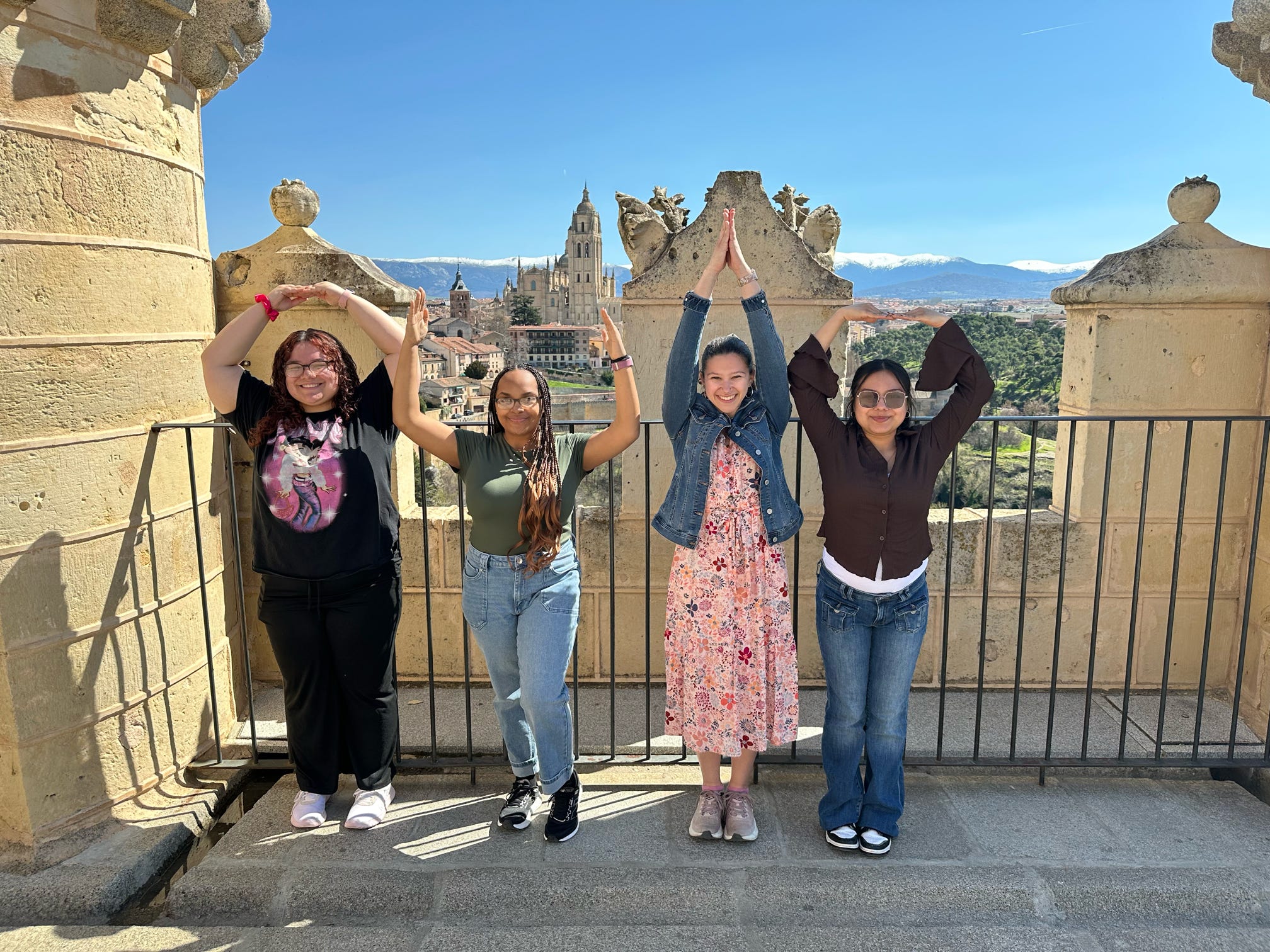
This year, the program included visits to Madrid, Segovia, Toledo and Barcelona, touring historical sites and cultural landmarks like Templo de Debod, the Sagrada Familia, the Alcázar Castle and more. The group also met with a Spanish journalist and community activist and even got to participate in a cooking class.
“This experience taught me to trust myself more than I did before going abroad. Whether I was navigating public transportation systems or conversing with people who only knew Spanish, I often had to rely on my ability to use my knowledge effectively to accomplish tasks like getting where I needed to go or communicating with others. I continually surprised myself by how easily I was able to integrate my learning into action, and even when I made mistakes, I was also able to make corrections and get back on track,” she noted.
Along with unforgettable experiences that developed Galperin personally, she also got to gain experience with international communications, something that she notes was a highlight of the program.
“I really enjoyed meeting with Lucila Rodriguez-Alarcon, director of the porCausa Foundation, whose work combines research, strategic message framing and media relations to share information and shape conversations about immigration in Spain. Seeing how Lucila crafts narratives was not only inspiring but also a reminder that the principles of good communication that I've learned about in class are universal and can be found on every continent!”