

In Kyrgyzstan, nursing education and practice are at a pivotal point that will determine whether nurses continue to play undervalued roles as assistants who are dependent on doctors or as collaborative and equal members of a healthcare team. During a four-month Fulbright U.S. Scholar assignment at Kyrgyz State Medical Academy (KSMA) in Bishkek, Joni Tornwall worked with faculty and students to deliver a positive, real-world impact on the trajectory of the nursing profession. She aimed to strengthen nursing education capacity through direct instruction, faculty development, and collaborative research.
Teaching and curriculum development
The purpose of Tornwall’s Fulbright project was to enhance existing Kyrgyz efforts to improve nursing education and equip the future Kyrgyz nurses with the autonomy and professional status required for delivering quality healthcare in Kyrgyzstan. KSMA has been working for several years to align its curriculum with international nursing education standards and prepare nursing students with competencies for professional practice that are underpinned by scientific knowledge and grounded in evidence-based practice.
“My Kyrgyz colleagues and I are encouraging nurses to shift their practice to a more evidence-based foundation. To transform the social and professional status of nurses, nursing as a discipline needs to enhance its autonomy, accountability, and the scientific base of nursing practice. This effort, this change in way of thinking, needs to start in nursing school and be reinforced throughout a nurse’s career,” Tornwall explained.
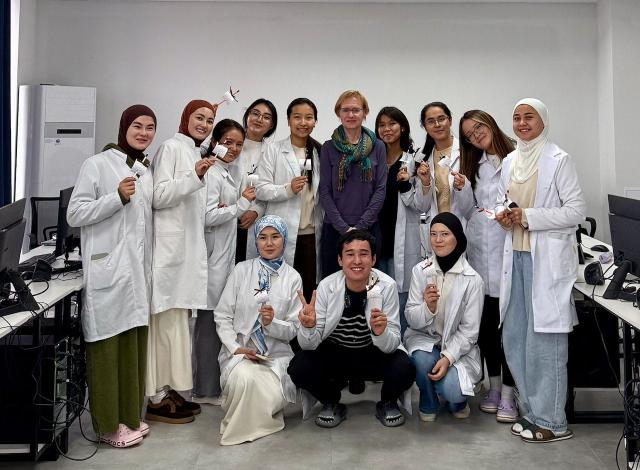
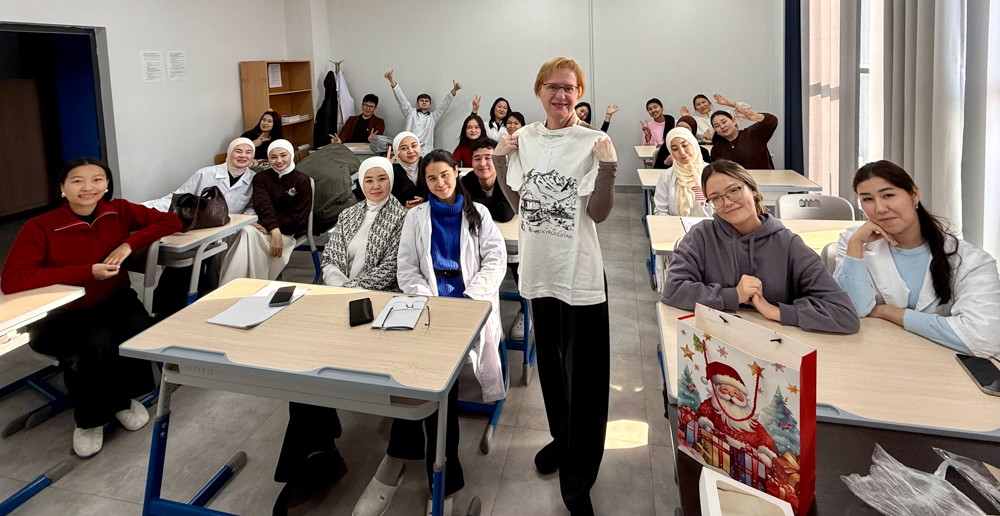
Tornwall enhanced these efforts by teaching two undergraduate nursing courses at KSMA, including a 10-week Academic Writing course and a 5-week Professional Concepts in Nursing course. Student presentations in the writing course addressed critical issues in Kyrgyz healthcare, including the public health crisis of antibiotic resistance, workplace violence against nurses, and wellness initiatives for nurses. She also developed a new Evidence-Based Nursing Practice elective designed to teach students to apply systematic approaches to solving clinical problems.
Tornwall’s experience was not without its challenges. She quickly learned that it was essential to adapt her teaching methods to overcome technological limitations, including uncertainty about Wi-Fi access and limited at-home computer access for students. "Even with a highly skilled interpreter, it was challenging to teach complex concepts to students and early-career faculty," Tornwall noted, but she expressed deep gratitude for the opportunity to improve her ability to quickly adapt communication styles based on available resources and target audiences.
Faculty development and institutional impact
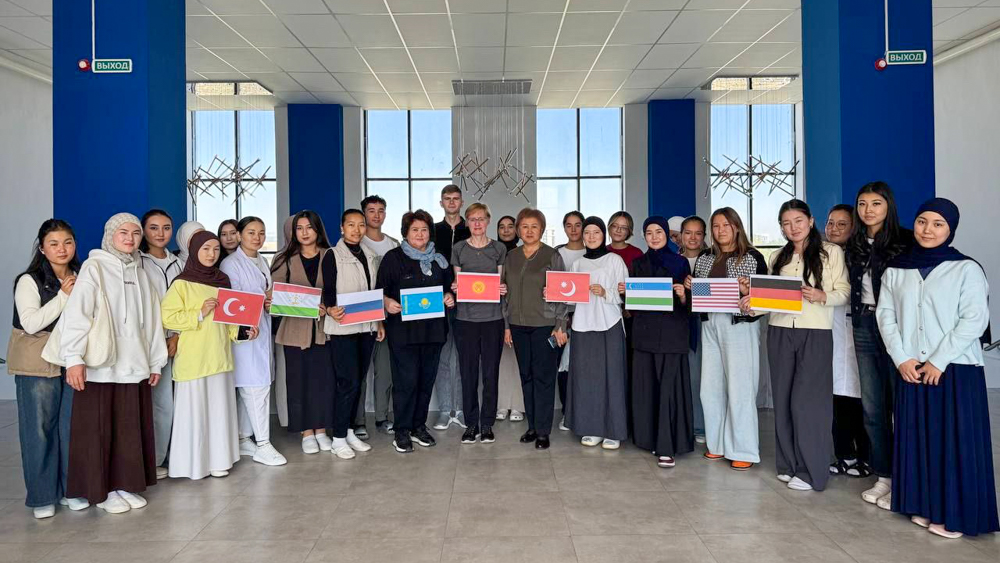
Tornwall delivered an extensive professional development series that reached 175 faculty members across multiple disciplines. Six 2-hour workshops covered Strategies for Clinical Teaching, Principles of Instructional Design, and Key Characteristics and Attributes of Nursing Students. She also conducted a seminar on grant writing and volunteered at the U.S. Embassy's American Corner, leading a four-week English Academic Writing course for community members pursuing educational and professional advancement.
Research collaboration and sustained impact
Tornwall launched a Q-methodology research project titled "Viewpoints on the Future of Nursing Education in Kyrgyzstan," serving as the principal investigator and overseeing data collection. The response from healthcare professionals across Kyrgyzstan was far greater than she and her faculty collaborators anticipated, demonstrating substantial interest in this topic among nurses and doctors across Kyrgyzstan.
“We got a tremendous response to my colleague's recruitment efforts, far better than I typically see from my own students and faculty here in the U.S. The response from nurses in the rural regions of Kyrgyzstan was exceptionally robust. Once participants understood the purpose of the study and how to use the online interface, they gladly completed the study activity and showed a high level of personal and professional investment in their responses,” Tornwall explained.
She is transitioning the research project leadership to an early-career KSMA faculty member, ensuring sustained scholarly impact beyond her grant period.
“The research data indicated a level of investment in this topic that neither my colleague nor I knew the full extent of. While we were aware of the problem – that is well documented – we did not know how concerned nurses, students and doctors are.”
As Kyrgyzstan works to improve public health, nursing practice, and nursing education, nurses are increasingly optimistic that respect for the nursing discipline will grow and that a pathway will be established for nurses to attain advanced degrees that are the hallmark of other scientific disciplines. Tornwall’s Fulbright project was a unique component of the broader strategy to elevate nursing education, build the Kyrgyz nursing workforce, enhance the social and professional status of nurses, and improve the health and well-being of Kyrgyz citizens.
Joni Tornwall is a clinical professor in the College of Nursing where she teaches courses on academic writing and instructional design. She also serves in the College of Nursing as the Director of Assessment and Evaluation and Co-Director for the Academy of Teaching Innovation, Excellence, and Scholarship.
Fulbright
The U.S. Fulbright Scholar and the U.S. Student Fulbright competition for graduate students are administered through the Office of International Affairs. For more information contact Joanna Kukielka-Blaser at kukielka-blaser.1@osu.edu. View a complete list of Fulbright recipients.
