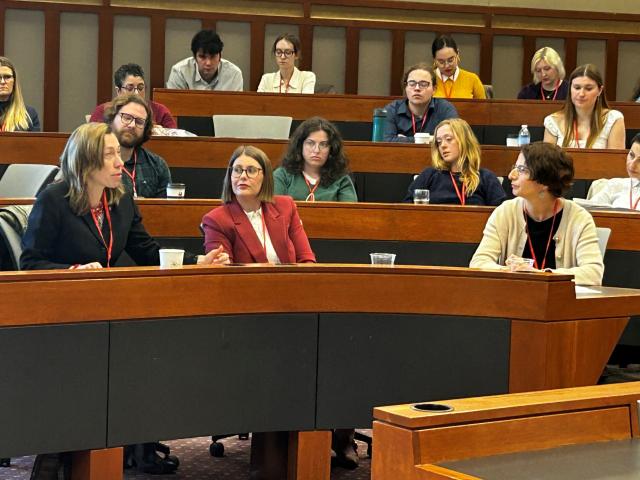
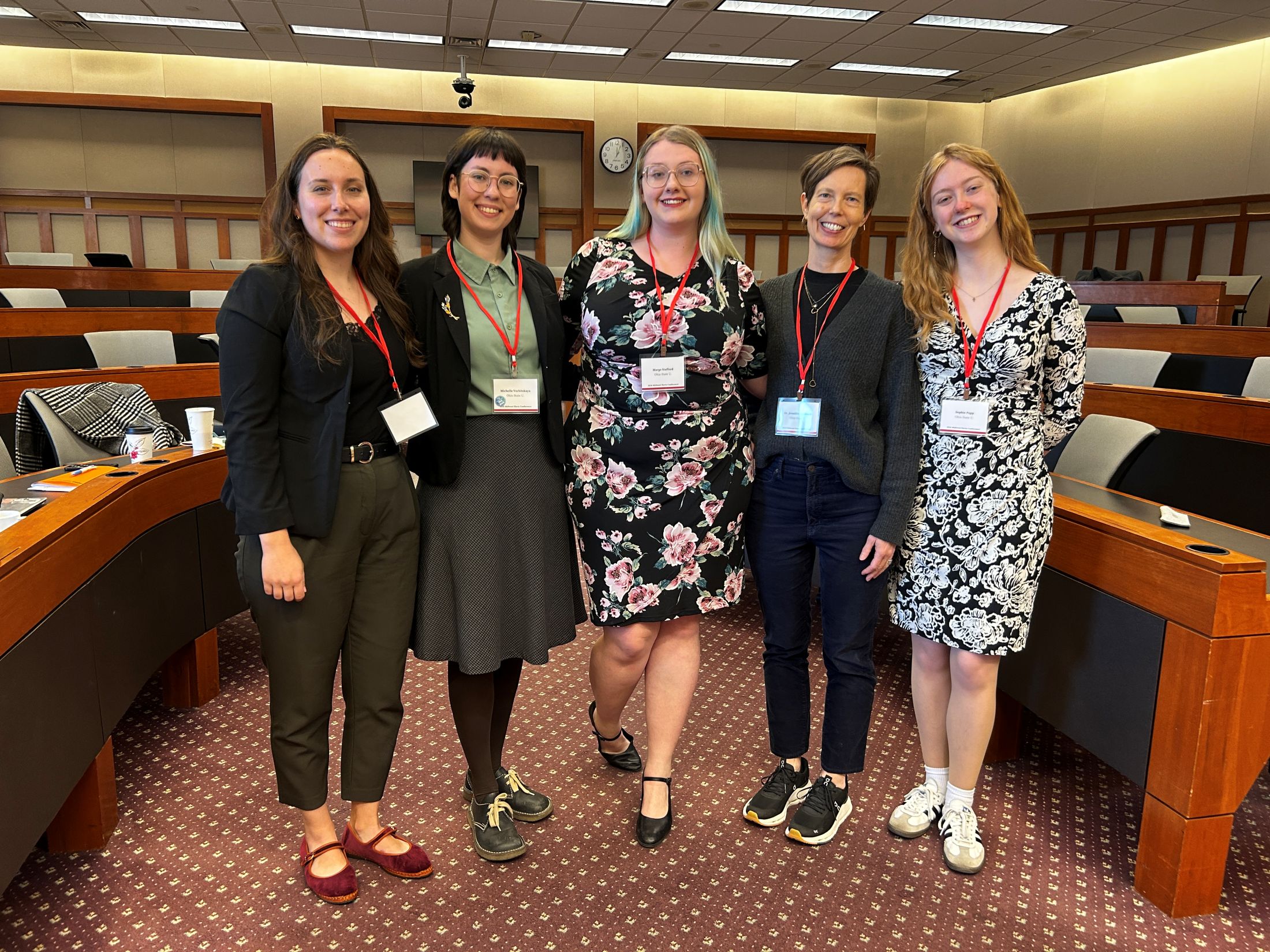
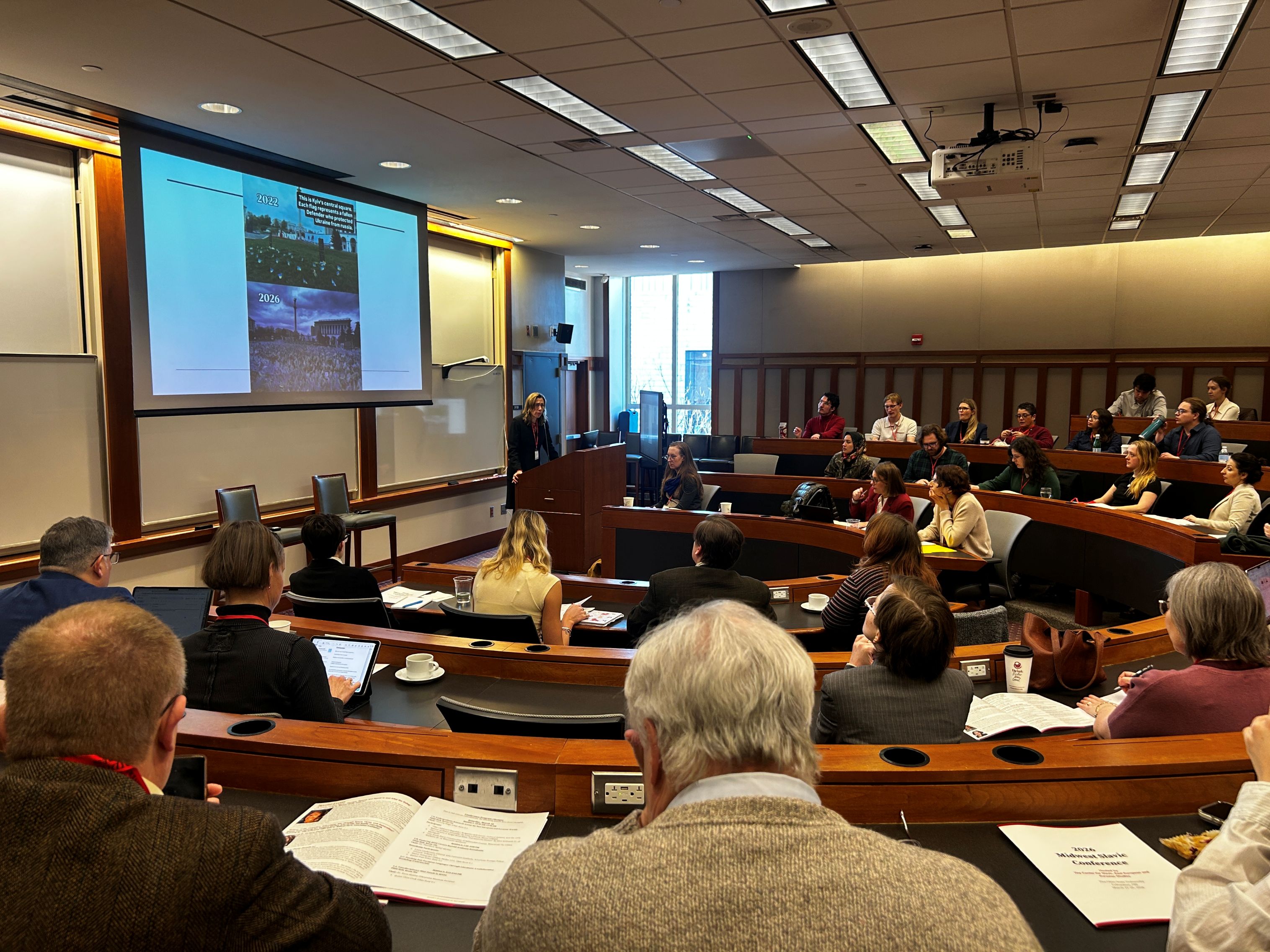
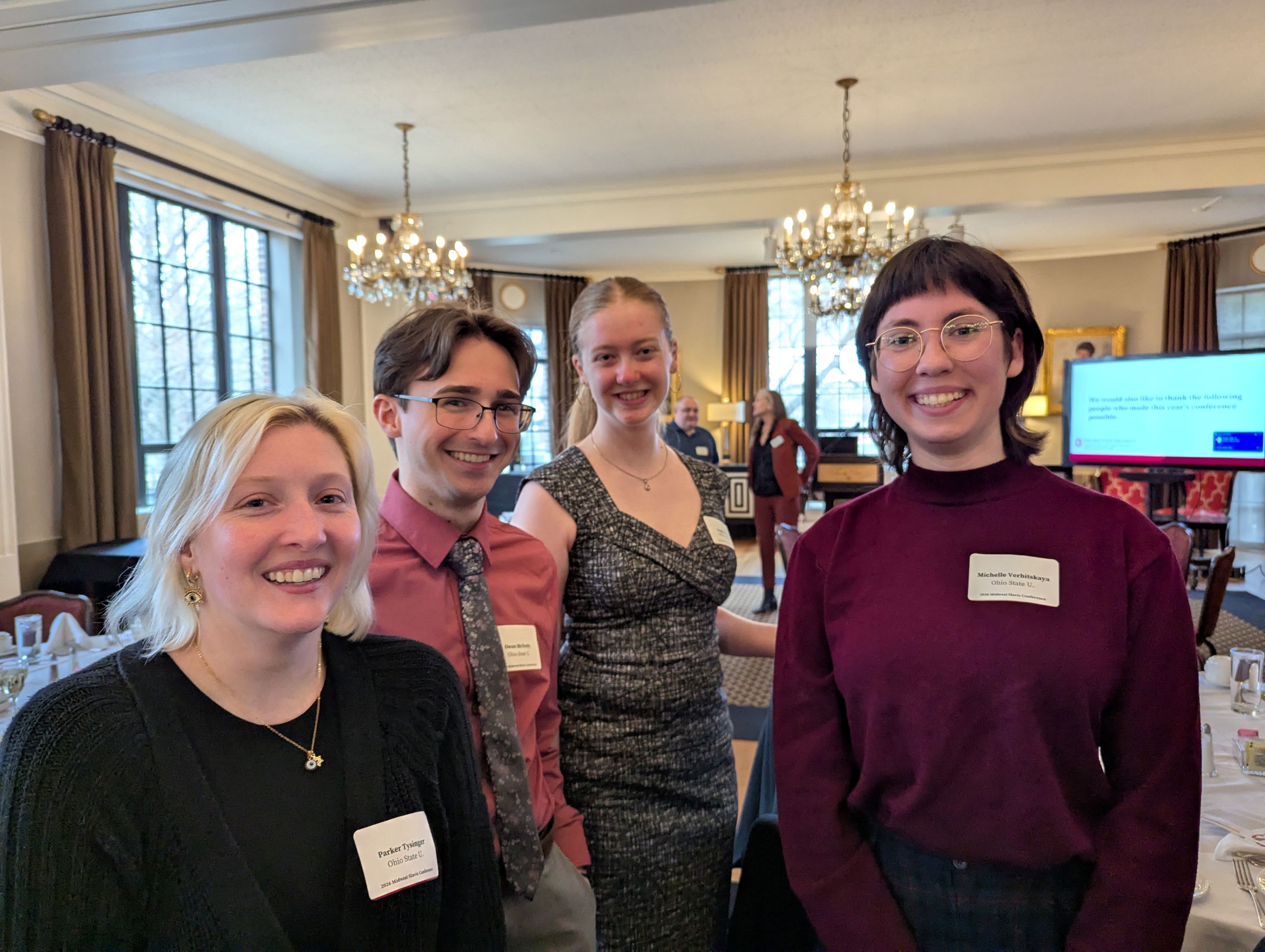
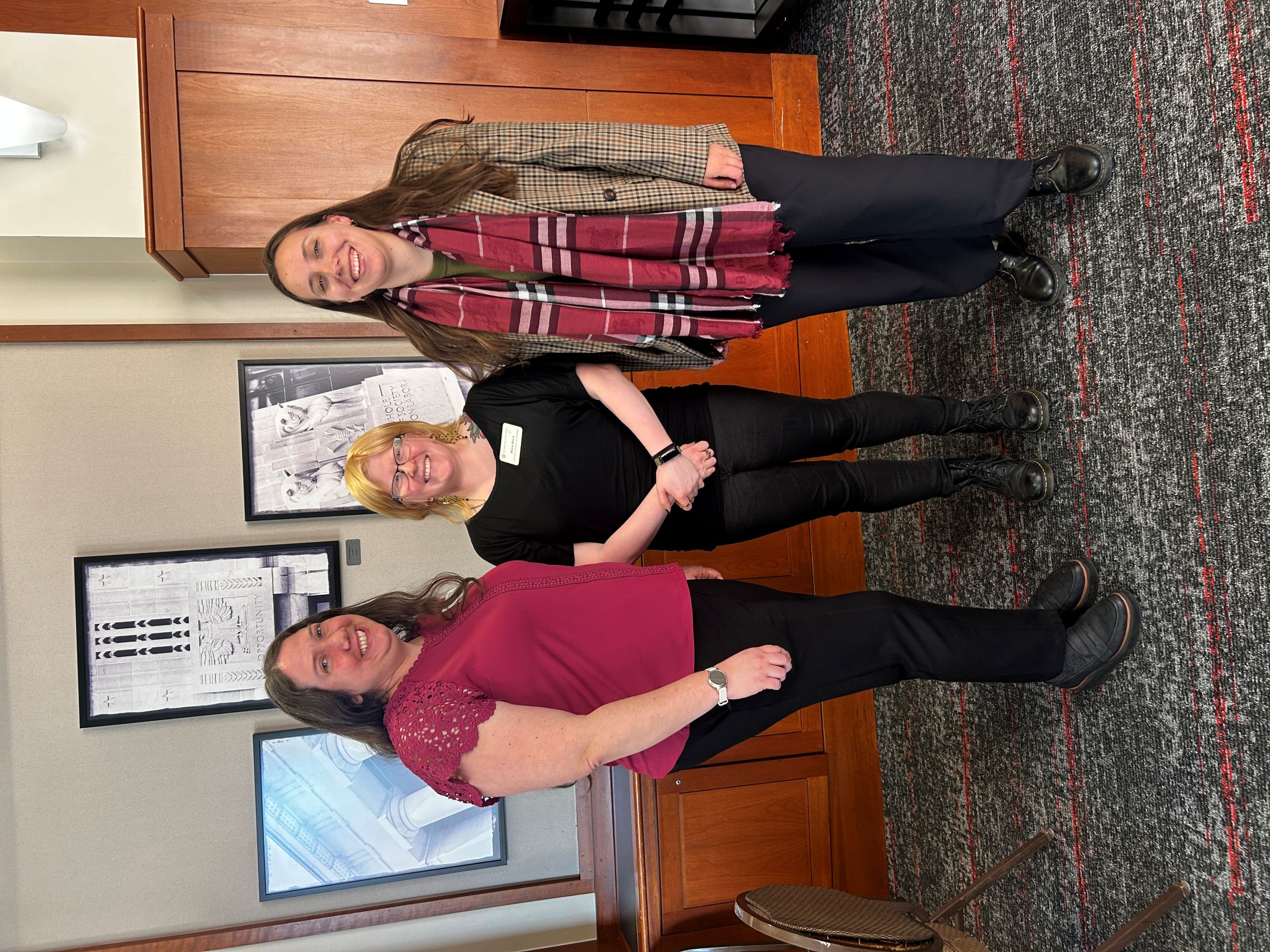
The Center for Slavic, East European and Eurasian Studies (CSEEES) and the Midwest Slavic Association (MWSA) hosted the 2026 Midwest Slavic Conference, March 27 - 29, on The Ohio State University campus. This year’s conference welcomed presenters and attendees representing 41 universities from across the United States and abroad. In total, 87 undergraduate and graduate students, independent scholars and faculty members presented original research across 24 panels. These panels spanned the disciplines of history, linguistics, social sciences and the humanities, and addressed topics relating to the Baltics, the Balkans, Central Europe, Eurasia and Eastern Europe.
As the 2026 conference centered on the theme of crisis and trauma, it created a shared framework for examining the enduring effects of war, displacement, authoritarianism and cultural erasure across the Slavic, East European and Eurasian world. Panels and discussions explored how individuals and communities grapple with these experiences through literature and the arts, social and cultural practices, historical memory and policy. Together, these conversations foregrounded questions of authenticity, identity and belonging, highlighting the persistent longing for connection to heritage, place and collective pasts that often emerges in moments of profound upheaval.
The conference opened with a keynote address by Jehanne Gheith, Duke University, titled “‘It Could Happen Again’: Memory, Trauma, and Repair in and after the Gulag.” Drawing on her work as both a scholar of Russian culture and a trauma‑informed clinician, Gheith examined narratives of Gulag survivors and their descendants, emphasizing the roles of silence, repression and intergenerational transmission in shaping traumatic experience. Her talk addressed the cultural specificity of “trauma,” the ways state‑enforced forgetting sustains power and the difficulties of pursuing repair after extreme violence. By foregrounding both resilience and the absence of simple closure, the keynote invited a broader conversation about how societies remember, heal and continue to live with the enduring consequences of historical catastrophe.
The keynote was followed on Saturday by a plenary panel titled “Echoes of the Unspoken: Witnessing War through Space, Verse, and Generation.” The panel featured Marianna Klochko, Ohio State, Ariel Otruba, Arcadia University and Natalia Vygovskaia, Miami University, and was moderated by MWSA President Alisa Ballard Lin, Ohio State, who also served as discussant and chair. General panels followed throughout Saturday and Sunday, with conference participants presenting on topics including trauma and cultural memory; politics, power, and resistance; language, identity, and belonging; and art, media, and performance as sites of social meaning.
In addition to its regular academic programming, the conference featured several special events. The Midwest Slavic Association Meeting provided an opportunity to discuss future conferences and initiatives, while also allowing incoming officers to share their ideas for expanding conference programming and outreach. The conference also welcomed the return of its lunchtime cultural event, which this year featured a deeply moving staged reading of The Body of a Woman as a Battlefield in the Bosnian War (1997) by Matei Vişniec. The reading was performed by Kelly Gallagher, Ohio State and Lin, and was followed by commentary on trauma in East European theater.
The conference also hosted the Midwest REEE Lightning Talks, which spotlighted undergraduate research across a wide range of disciplines related to Eastern Europe and Eurasia. Participating students delivered five-minute presentations on their original research and engaged in discussion with both judges and audience members. This year’s competition was won by Nora Archer of Kenyon College for her presentation, “Supranational Foreign Policy: The European Community and the Creation of Slovenia.”
This year's student mixer was hosted by CSEEES' and MWSA's graduate student representatives Margot Hare and Siobhan Seigne and provided both undergraduate and graduate students a chance to network with their peers and make new connections. Faculty and independent scholars also had a chance to mingle during our faculty and independent scholar mixer. This allowed for colleagues and friends, both old and new, to network and reconnect.
Read the complete story, which includes a list of committee members, volunteers, donors and sponsors on the Center for Slavic, East European and Eurasian Studies website.