
The Buckeye Brighters Academic Forum on March 13 featured research projects that examine equity, inclusion, knowledge production and pedagogy across higher education, digital learning and cultural contexts. The projects foreground how power, technology, policy and instructional design shape educational experiences for marginalized, international and historically underserved communities. Graduate students in the College of Education and Human Ecology, College of Arts and Sciences, and College of Food, Agricultural, and Environmental Sciences presented at the forum.
Buckeye Brighters Academic Forum
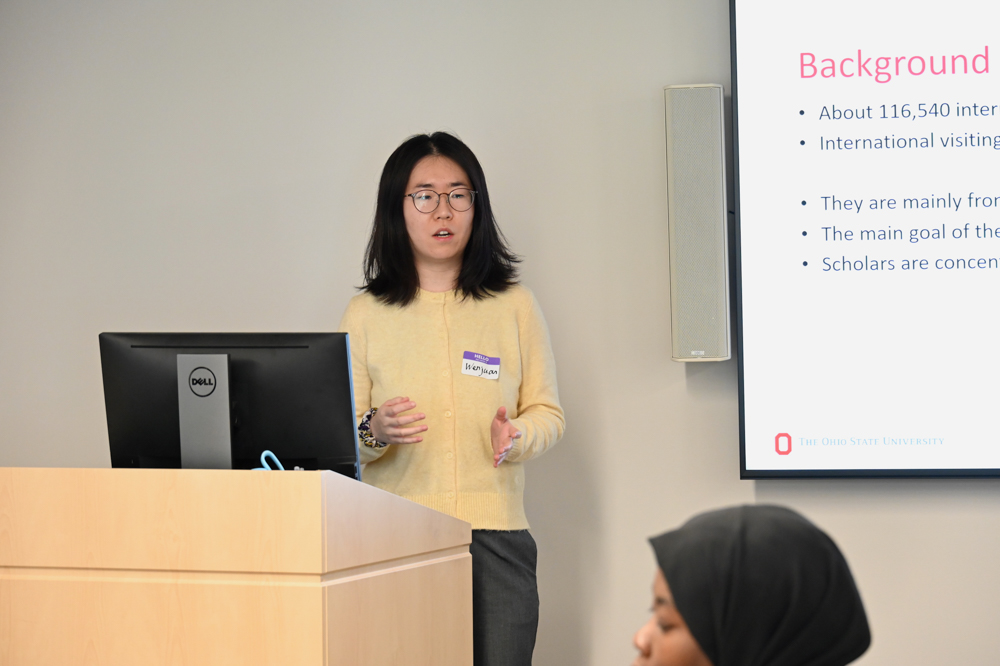
A critical analysis of international visiting scholars’ experiences in the U.S.
- Xu Wenjuan, Education and Human Ecology
International higher education operates within an unequal and hierarchical structure where developed countries are positioned as the center and frontiers of academic research. This unequal structure is closely interwoven with an epistemic injustice in knowledge creation and dissemination. This study examines this issue by diving into international visiting scholars’ exchange experience in the United States. The U.S. attracted more than 100,000 visiting scholars in the year 2023. However, research suggests that visiting programs are not effective in facilitating reciprocal intellectual exchange due to program structure and lack of academic support.
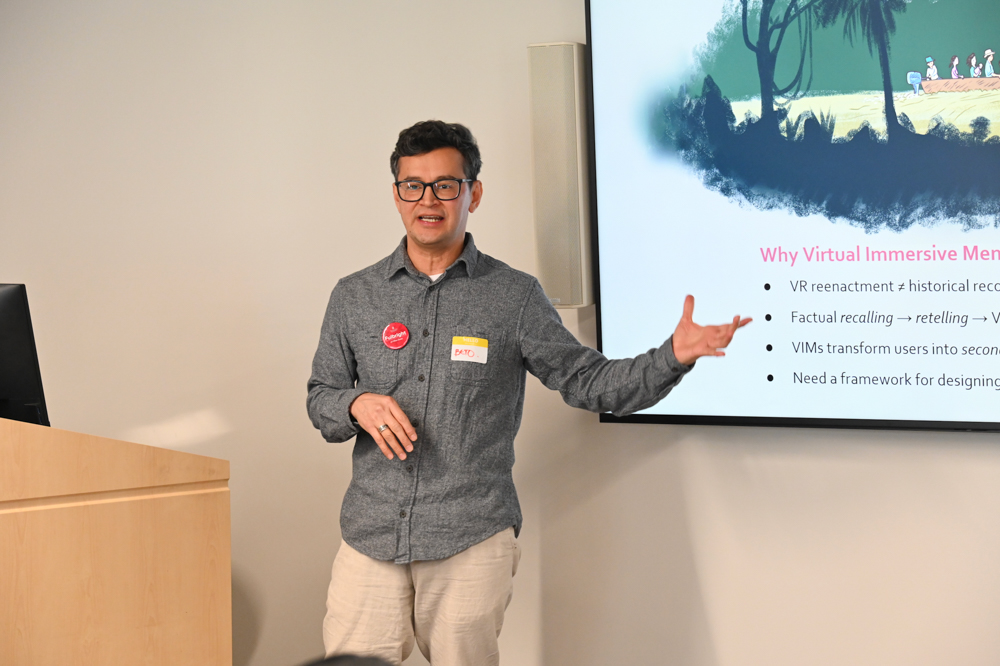
Designing a Virtual Immersive Memento (VIM)
- Jorge Alberto Vega Rivera, Arts and Design
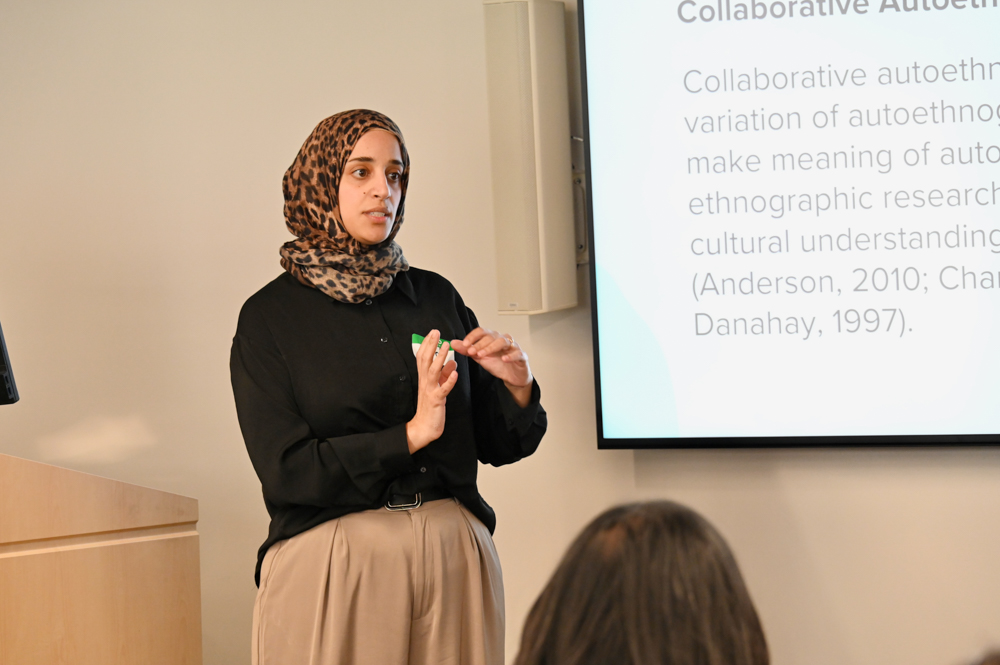
The Virtual Immersive Memento (VIM) proposes a conceptual framework for creating VR experiences that retell personal and collective memories. Rather than reconstructing the past as a factual or historical simulation, VIM frames immersive media as a mediated act of remembrance in which the interactor becomes a secondary witness. Grounded in Research-through-Design, autoethnography, and experimental ethnography, the project develops and evaluates VR prototypes based on family testimonies from rural Colombia.
Cultivating Resilience: Sustainable Agriculture Research for Long-term Food Security
- Sumita Sen, Horticulture and Crop Science
The study examines the impact of sustainable agricultural practices on crop productivity for climate resilience and long-term food security. Individual and interactive effects of multiple cropping factors - cover cropping, tillage, nitrogen management and crop rotation are evaluated for corn, soybean and wheat yields at field level. The results highlight that diversified rotations and cover crops improve productivity emphasizing the need for farm-situation specific adaptive strategies to address changing weather patterns and increasing food demand.
Intelligent Conversational Agents as Scalable Learner Support Solutions: An AI-Based Approach to Motivation and Social Presence
- Anastasia Shikanova, Education and Human Ecology
Learner disengagement in fully online courses extends beyond an individual challenge and contributes to lower persistence, inequitable outcomes, and diminished educational opportunity. This session examines how intelligent conversational agents powered by artificial intelligence can function as scalable learner support solutions that strengthen motivation, self regulation, and social presence. Rather than viewing chatbots as simple help tools, the session positions them as intentionally designed support systems that foster engagement and connection in digital learning environments.
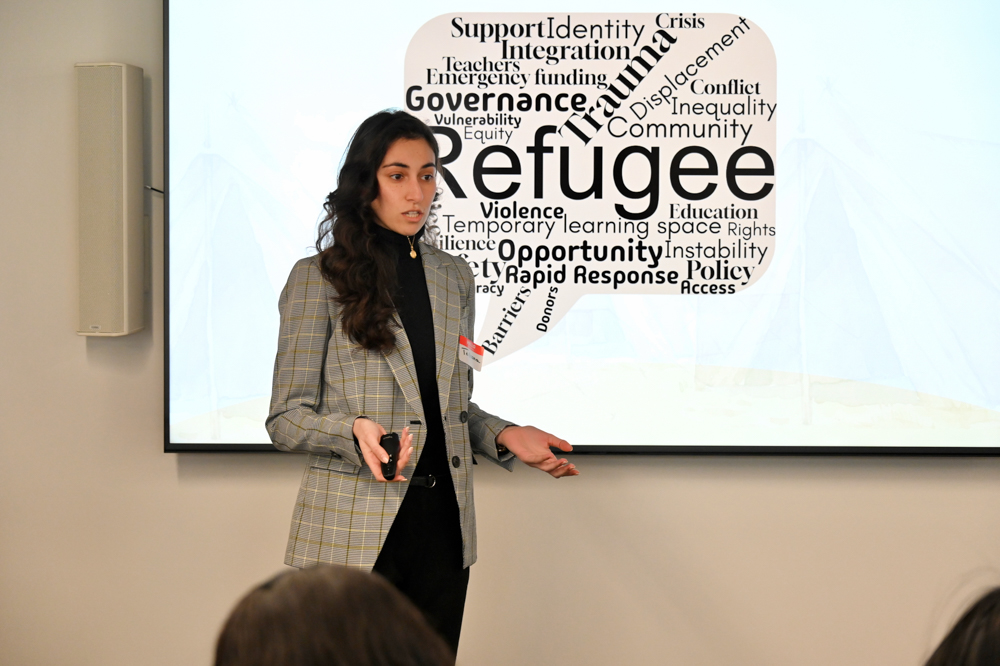
Capitalism to the Rescue? Education in Emergencies as a Capitalist Response to Its Own Disruptions
- Tatiana Chaiban, Education and Human Ecology
This paper assesses the impact of Education in Emergencies (EiE) models shaped by capitalist and market-driven humanitarian aid, using Lebanon as a primary case study. In the wake of the Syrian refugee crisis and Lebanon’s 2019 economic collapse, EiE interventions have increasingly adopted a "business model" approach. This research examines how the interaction between EiE and capitalist logic influences an educational landscape already burdened by overlapping socio-economic crises.
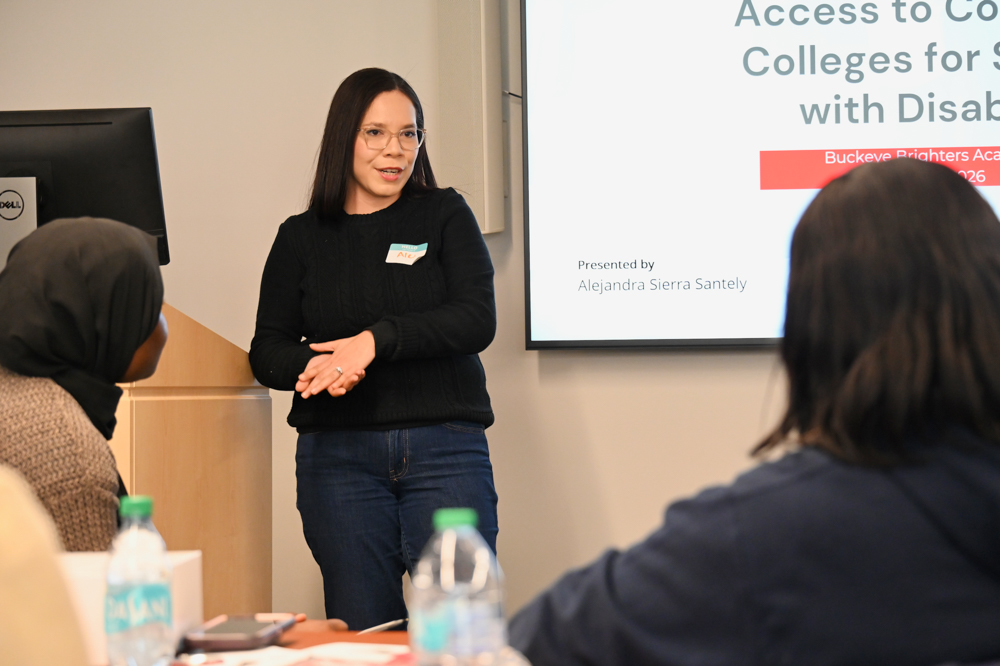
Access to Community Colleges for Students with Disabilities: A Systematic Review
- Alejandra Sierra Santely, Education and Human Ecology
This study presents a systematic review examining access to U.S. community colleges for students with disabilities, a population that continues to encounter structural, academic, and social barriers despite the open-access mission of two-year institutions. Findings highlight systemic challenges, including inconsistent accommodation processes, limited faculty training, stigma surrounding disability disclosure, and fragmented support services. At the same time, the literature points to emerging institutional strategies such as proactive advising, Universal Design for Learning (UDL), embedded support models, and cross-campus collaboration as mechanisms for improving student outcomes.
Academic Motherhood from an International Perspective
- Khosbayar Nyamsuren, Education and Human Ecology
International women pursuing graduate education in the United States often study during prime caregiving years, yet their experiences as mothers remain largely absent from academic motherhood research. Drawing on Ward and Wolf-Wendel’s framework and transnational motherhood scholarship, this conceptual paper examines how international graduate student mothers navigate academic work, caregiving, migration, and institutional constraints. The study highlights how visa systems, financial precarity, and limited support shape their experiences and calls for more inclusive research and culturally responsive institutional policies.
New Authoritarianism and the Politics of Political Education
- Ballard Walker, Education and Human Ecology
In the context of schools, educational justice is most often framed as a matter of distributing resources and opportunities to prevent or ameliorate inequality and exclusion. However, framing discussions of educational inequality solely in terms of distribution of resources softens the important role that individual educators must play to ensure the inclusion of our most marginalized students. This research, then, engages a second, less explored, theoretical framework of recognition to re-empower educators to take necessary action to secure educational justice for their students. I explore the dynamics of a recognition-based pedagogy in conversation with an innovative approach to schooling in the German ‘community school’, which explicitly aims to promote educational excellence for all students, particularly those from culturally marginalized backgrounds and those with dis/abilities.
Pedagogy of Explicitness: Intentional Approach to Inclusive Teaching
- Qazi Muhammad Zulqurnain and Hind Haddad, Education and Human Ecology
Our research examines how teaching practices shape the inclusion of international students in U.S. higher education classrooms. Although classrooms aim to be collaborative and inclusive, international students often face invisible barriers that limit participation. We study how instructor behaviors—such as explicitly recognizing students, building verbal bridges, and noticing silence—affect engagement. The goal is to propose a pedagogical approach rooted in intentional and explicit teaching practices that foster meaningful participation and treat international students as essential contributors to collective learning.
Accommodating UDL and HOTS through the LOGICA Model
- Dian Sawitri, Education and Human Ecology
This research proposed a learning instruction model by the name of LOGICA, which stands for Listen, Observe, Gather, Identify, Create, and Assess. Combining the foundational theory of Universal Design for Learning (UDL) and Higher-order Thinking Skills (HOTS), this model tries to facilitate different learning preferences to guide the learners to achieve the intended learning outcomes, as illustrated in the Outcome-based Curriculum (OBE). As an extension of a preliminary study, this research adopts a research and development design under the ADDIE (Analysis, Design, Development, Implementation, and Evaluation) stages. Currently, this research is under the development phase before a real classroom implementation and evaluation.
The Buckeye Brighters leadership team of Qazi Muhammad Zulqurnain, Suci Nazier, Rika Mardiana and Khosbayar Nyamsuren organized the forum. Joanna Kukielka-Blaser, director, Fulbright and Fulbright-Hays Programs, provided opening remarks for the forum. Caroline Omolesky, assistant director, Global Engagement, offered closing remarks for the forum.