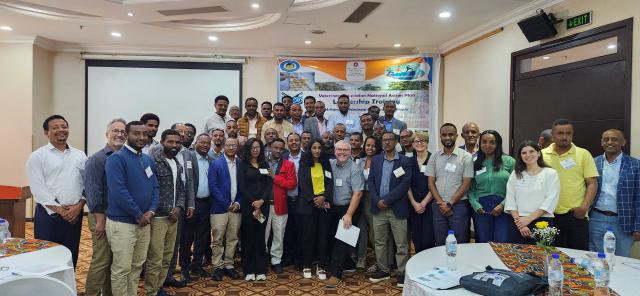
A specially tailored introductory leadership training was held in Addis Ababa in mid-December 2025, marking a major milestone in advancing the implementation of Ethiopia’s Veterinary Education National Action Plan for the 2020 Harmonized Veterinary National Curriculum. This customized two-day training convened 36 faculty members from 19 veterinary schools across Ethiopia, specifically the chairs, vice chairs and secretaries designated to lead the 12 newly established committees and task forces responsible for advancing the implementation of the action plan. This plan, developed with the support of Ohio State's College of Veterinary Medicine, aims to strengthen veterinary education across the country, ensuring "Day-1 Veterinarians” are equipped to meet Ethiopia’s agricultural and public health needs.
This training was specifically designed in close consultation with the Veterinary Education National Action Plan's (VEd-NAP) leadership, informed by a comprehensive needs assessment survey. The final program included sessions on essential leadership skills and topics necessary to build a team culture that fosters trust and inclusivity, conducting effective meetings, delegating responsibilities, and streamlining workflows to reduce unnecessary effort and improve time management. The overall purpose of the training was to provide the necessary tools and skills that this local leadership will need to ensure long-term sustainability of this plan.
The training was designed and delivered by expert consultants Jeanine Cogan and Todd Sazdoff, recognized specialists in leadership and organizational development. Cogan brings extensive experience coaching CEOs, executive directors and other leaders in nonprofit organizations, associations, small businesses and government agencies to successfully achieve their goals. Sazdoff offers organizational development expertise, having developed executive coaching programs and leadership initiatives for the U.S. Department of Agriculture and major private sector organizations. Faculty members from the University of Gondar (Achenef Melaku, Professor Tsegaw Fentie, Shimelis Dagnachew Nigatu, Adugna Molla, Seleshe Nigatu and Mohammed Yesuf Adem) also served as facilitators during the training and provided technical support as the point of contact for each of the VEd-NAP committees and task forces.
The training concluded with a practical section focused on “Leadership Activation” led by the Ohio State team of Armando Hoet, director of the Veterinary Public Health Program, and Alice Matos, Veterinary Public Health Resident. During this hands-on component on the second day, participants applied the tools and skills they had learned to produce practical outputs, including an activity timeline, a task breakdown plan, and a six-month activation work plan, identifying quick wins and key initial steps to launch their committee’s work.
As the first training of its kind for veterinary faculty in Ethiopia, the program was described by participants as “engaging and collaborative,” and it received excellent post-event evaluations.
In his closing remarks, Kassahun Tegegne, vice president for Academic Affairs at the University of Gondar, emphasized that “this training will provide championing skills” necessary for these leaders to fulfill their roles, underscoring the importance of properly trained leadership in driving systemic changes. He noted that by equipping these emerging leaders with practical tools and confidence, the training represents a critical step toward launching the effective implementation of VEd-NAP. Active participation in the training demonstrated a shared commitment to strengthening veterinary education in the country, according to Tegegne. As agriculture remains the backbone of Ethiopia’s economy, this commitment is expected to translate into larger gains at the national level, which depend on a strong and well-trained veterinary workforce.
For more information about these activities, inquiries can be sent to Armando Hoet at hoet.1@osu.edu or Amanda Berrian at berrian.4@osu.edu.